Skip to content

Your trips, properly told. Websites for specialist tour operators.

Whether you plan tailor-made trips, run small groups or sell guided days, the job is the same: put what your team knows on the page, make it easy to ask, and keep it current. That’s what we build. It’s the two of us, and when you ring, you get one of us.

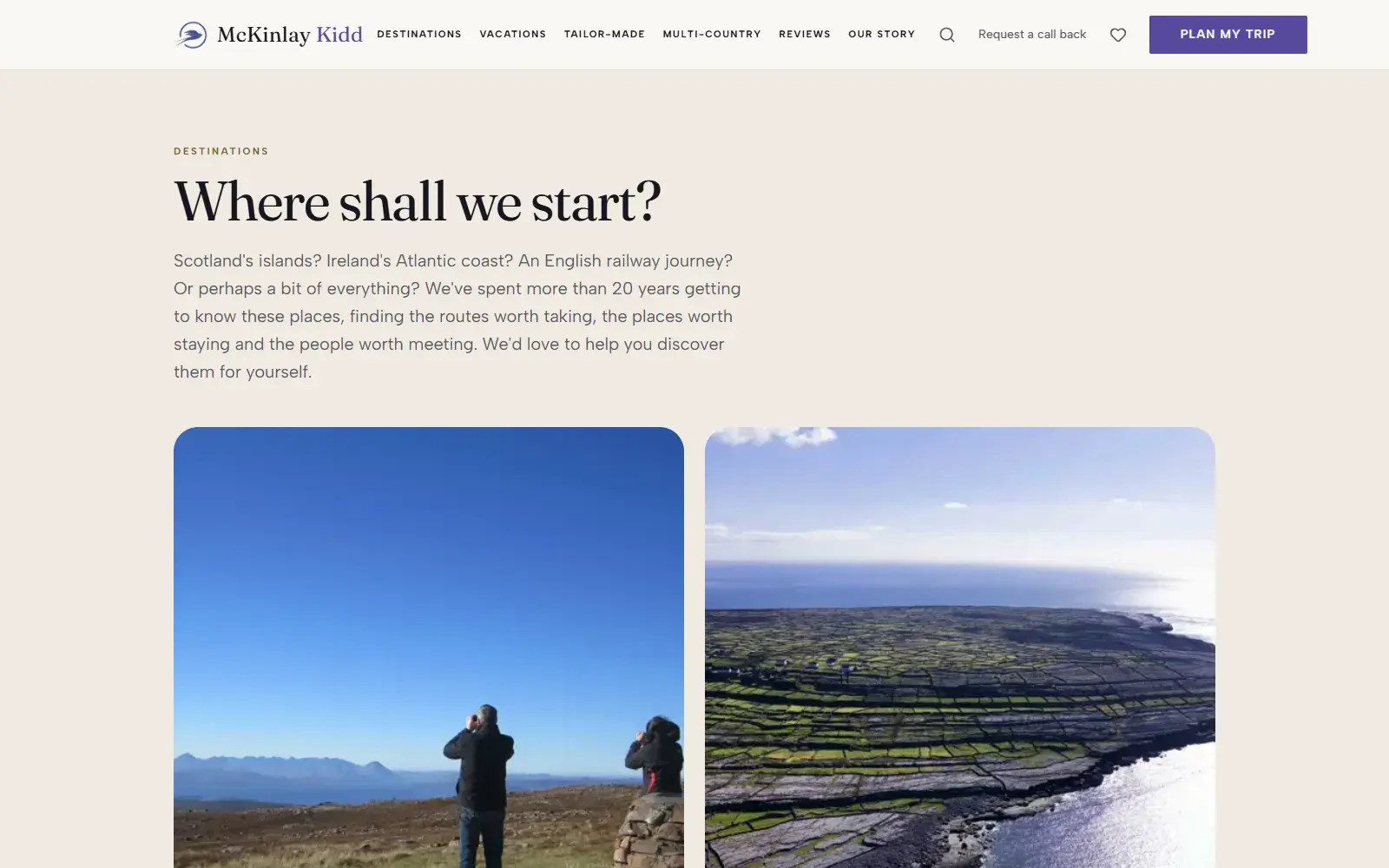
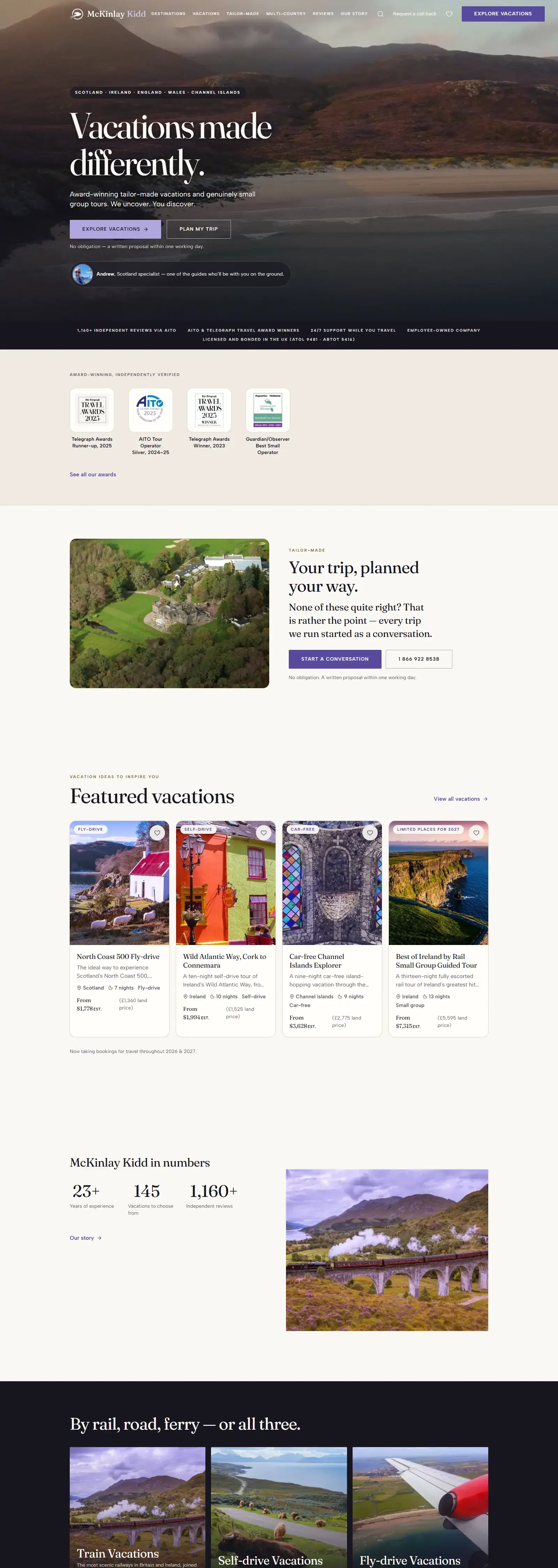
The home page of a tour operator website we are building, from its opening view of a Highland coast at dusk down through its featured trips.
Pictured on this page: a tour operator website we are building now, for McKinlay Kidd. It launches in December 2026.

A specialist’s advantage is what its people know: the right month, the quiet road, the guide worth waiting for. A website should put that to work.

Where a tour website usually lets you down.

It is rarely the design. It is that the site was built like a brochure, and a tour business doesn’t sell like one.

  1. 01

    The knowledge stays in people’s heads

    Your team knows which month is best, which room to ask for and which guide makes the day. The trip page says ‘explore stunning scenery’. The detail that sells the trip never reaches the page.

  2. 02

    A good enquiry is hard to make

    No guide price, no dates, a form at the bottom of a long page. Serious travellers give up, and the enquiries that do arrive take three emails to qualify.

  3. 03

    Every change is a job for someone else

    A price moves or a departure sells out, and the site waits for a developer. So it drifts out of date, and your team stops trusting it.

  4. 04

    AI search can’t read it

    People now ask an assistant where to go and who to book with. A site built from pictures and adjectives gives it nothing to quote.

What we build instead.

Four things, one for each of those problems. The pictures are from a tour operator site we are building now.

01 / 04

A page for every trip

The itinerary, the practical detail and the price guidance a serious traveller looks for, written from what your team knows. If you sell to more than one country, each market can have its own site, its own currency and its own choice of trips.

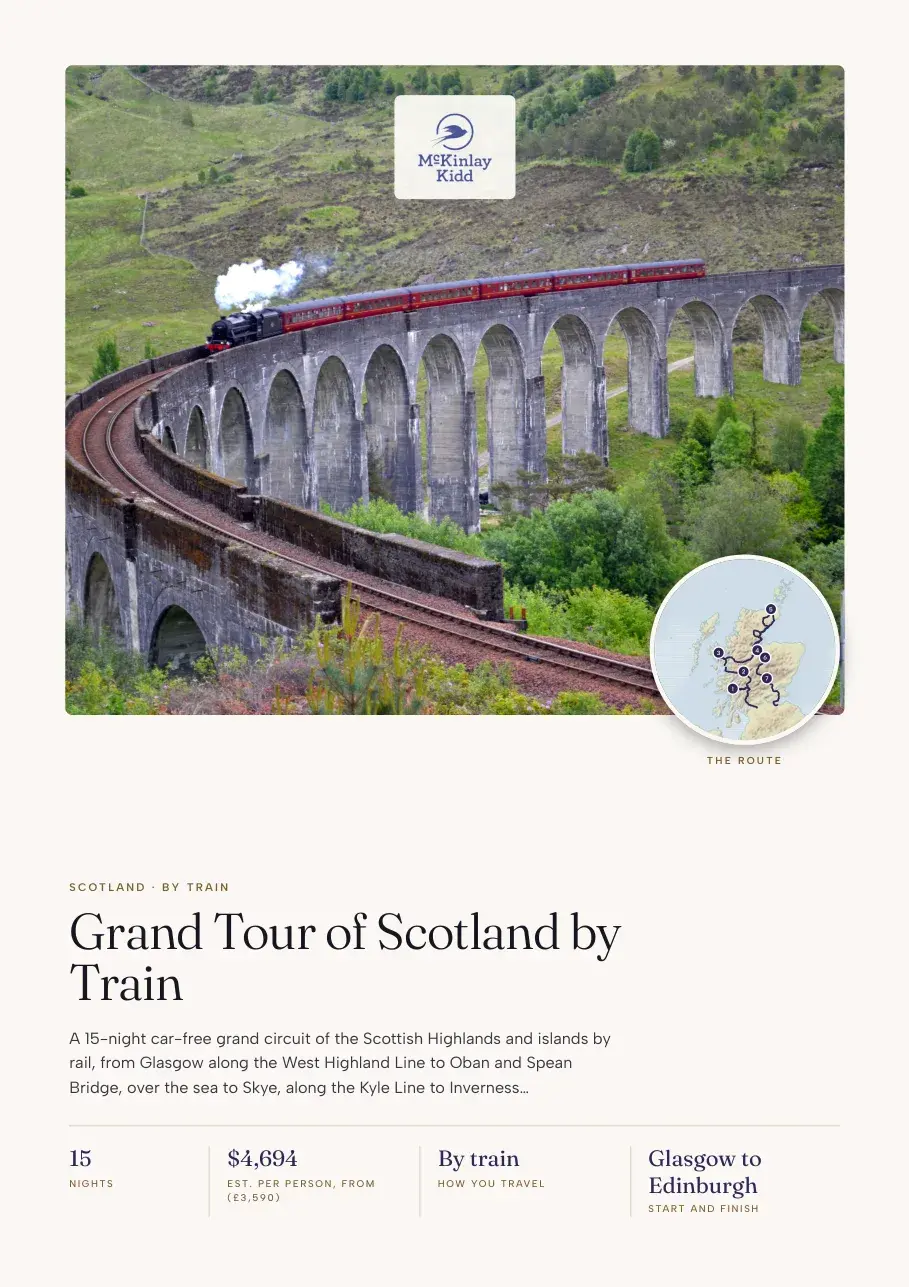
Pictured: A trip page: how long, where, a guide price in the visitor’s own currency, and when it runs.
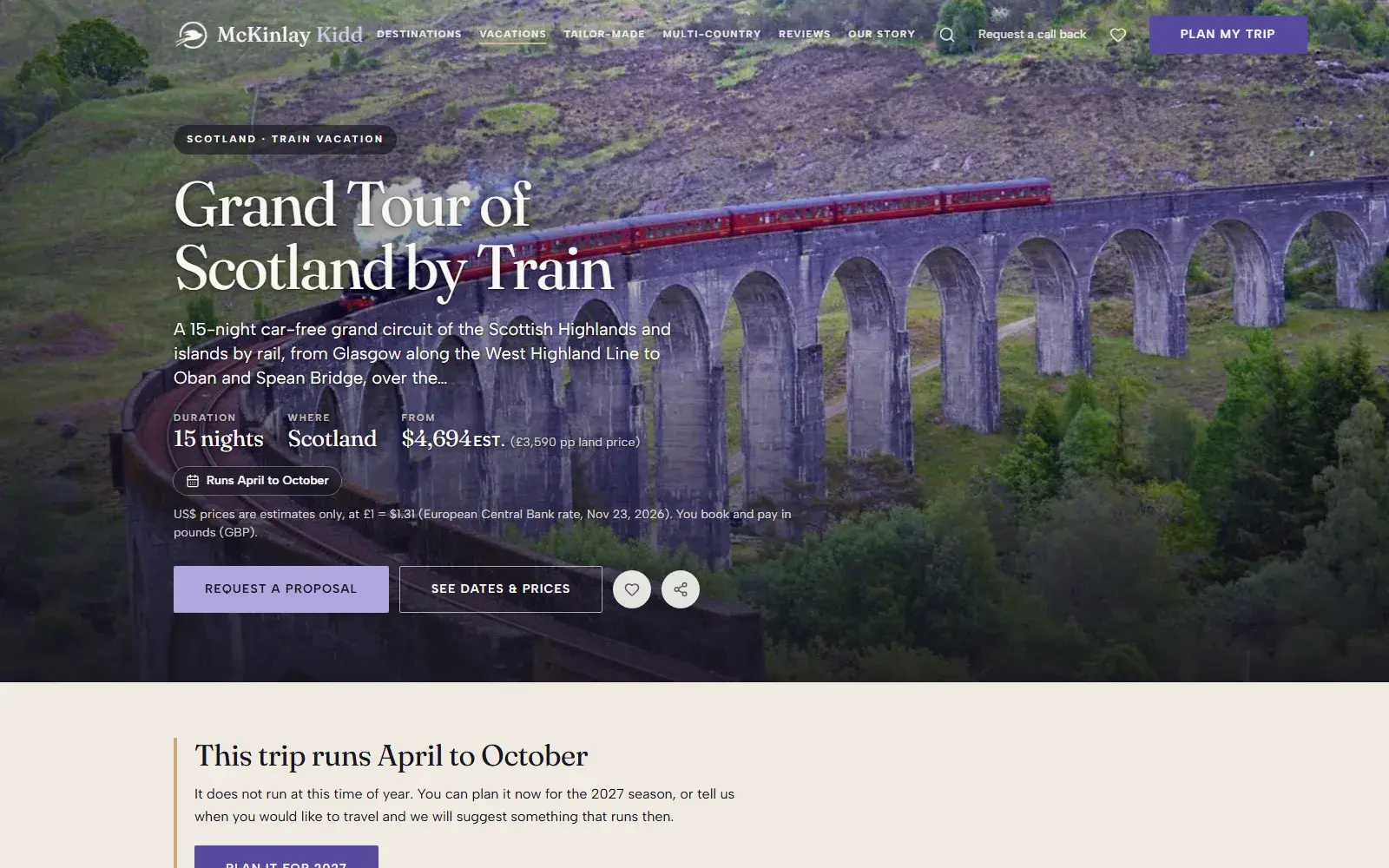
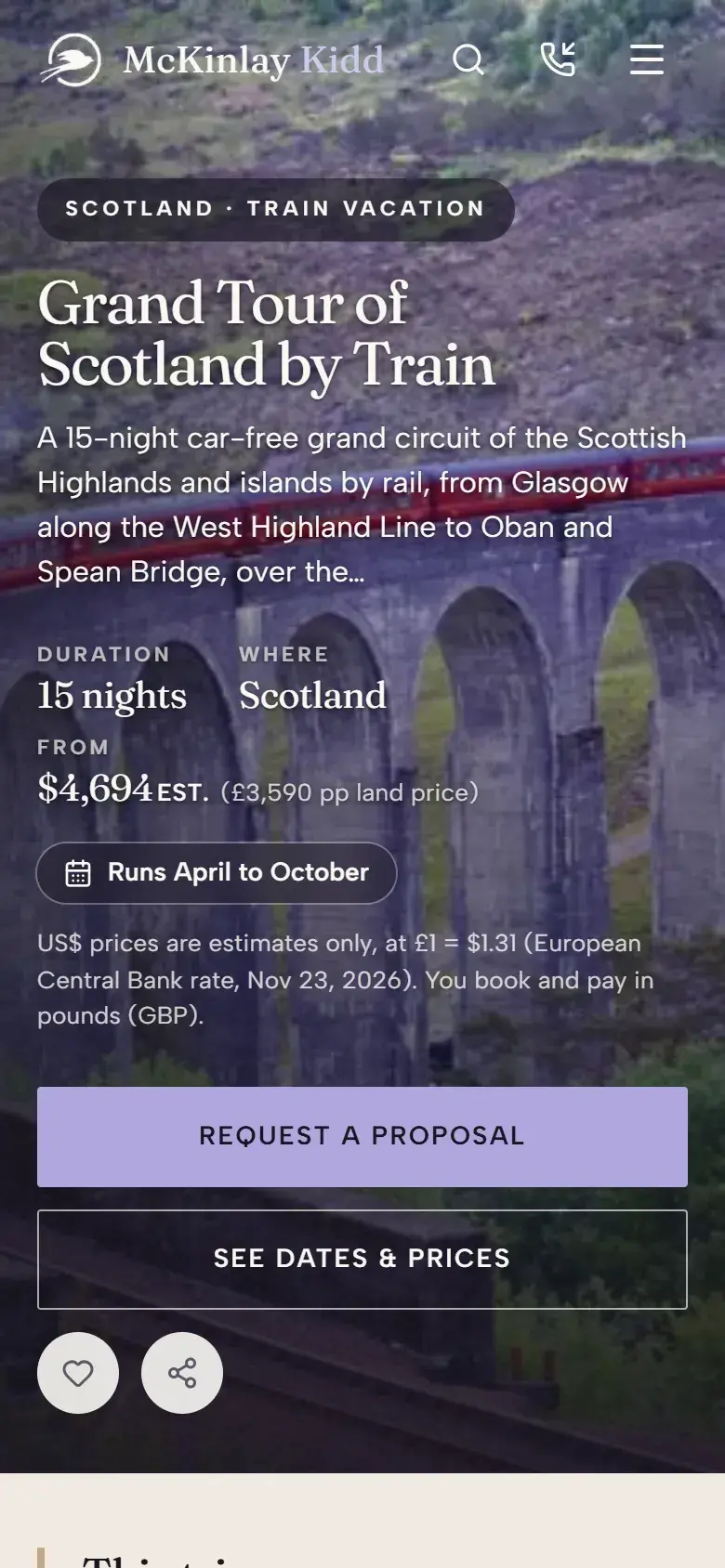
A trip page: a rail tour of Scotland, with its length, where it goes, a guide price in US dollars and the months it runs.

02 / 04

Enquiries that reach your team

The way to ask is on the first screen of every trip, phone included. Every enquiry is emailed to your team and a copy is saved and backed up. If you use a reservation system, we speak to its supplier and tell you plainly what can be connected and what it would cost.

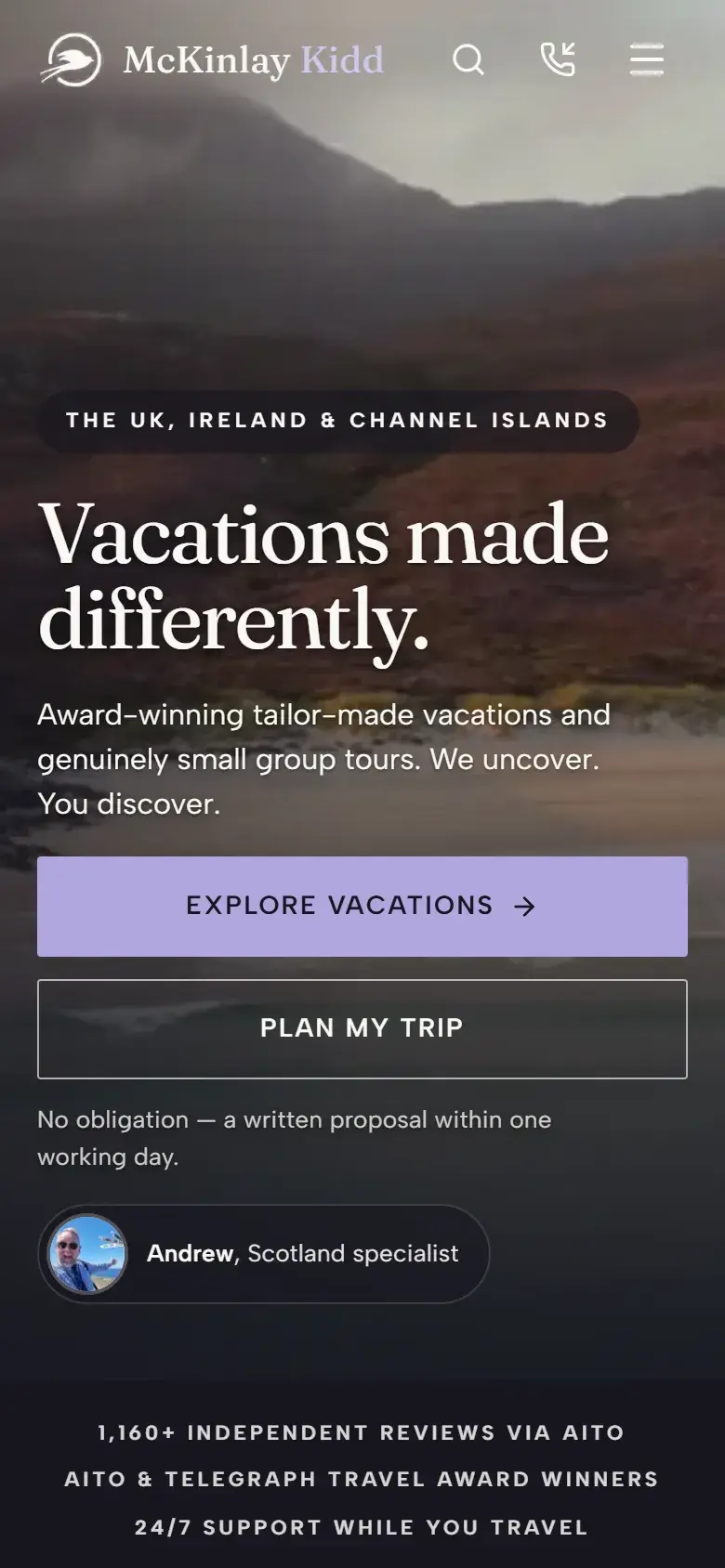
Pictured: The same site on a phone. The request button sits on the first screen.

The same trip page on a phone, with its Request a proposal button on the first screen.The same home page on a phone.

03 / 04

A studio your team runs

Change a price, add a departure or publish a new trip without ringing us. The content studio is set up around the way you describe your holidays, and it comes with a help library written for your site.

Pictured: A destinations page. Its words, pictures and order are edited by the operator’s own team.

A destinations page, under the heading ‘Where shall we start?’

04 / 04

Brochures from the same source

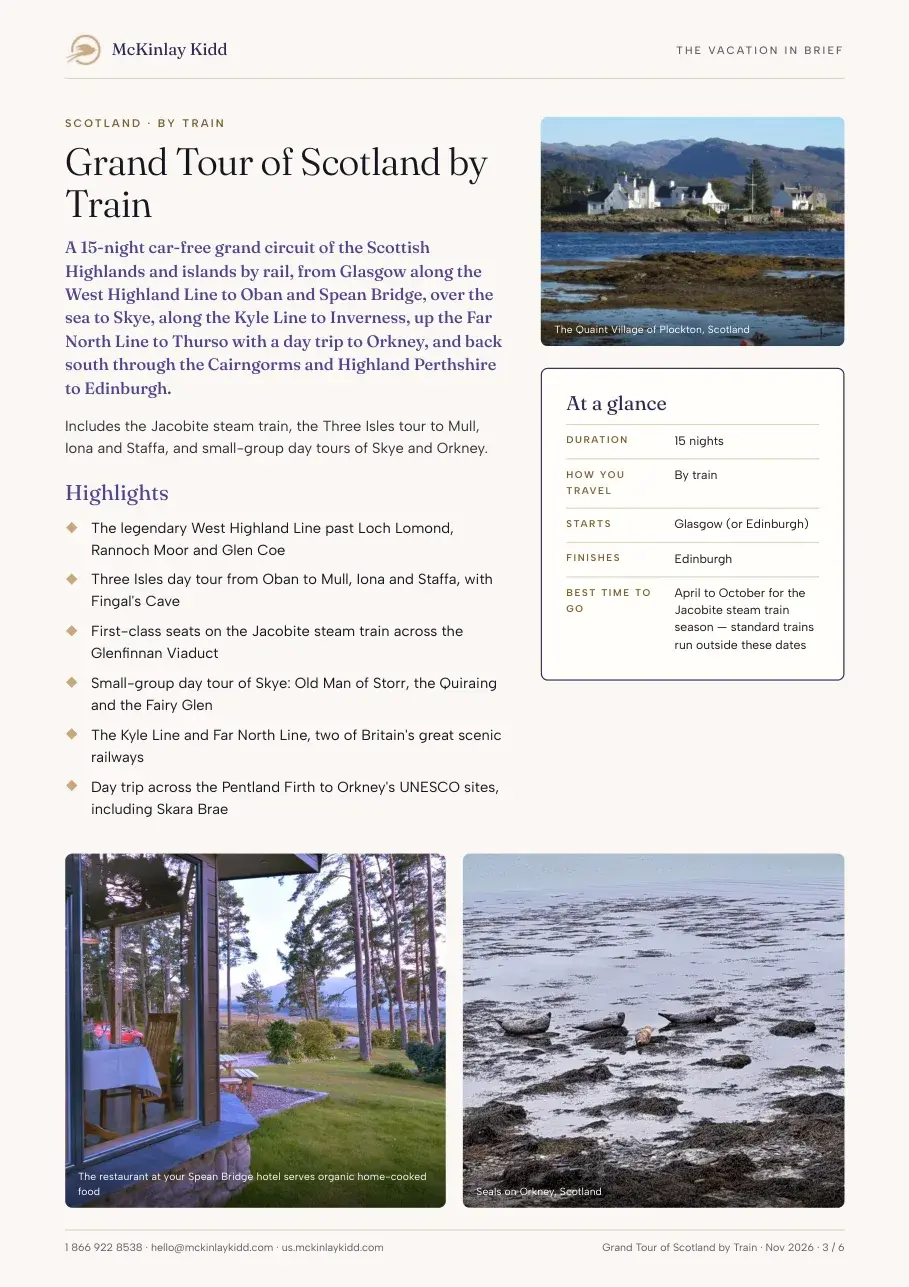
Trip brochures as PDFs, made from the content already on the website, so the page a customer reads and the brochure they download say the same thing.

Pictured: Three pages of a six-page trip brochure, made from the trip page.

Whatever kind of trips you run.

The parts are the same for every operator. What goes first on the page depends on how your customers buy.

How we would shape a site for each kind of tour business
If you sellThe site leads with
Tailor-made tripsStarting points with a guide price, then the quickest route to a conversation with the person who will plan it.
Small-group and guided toursDates, what is included and who leads it, kept current by your own team.
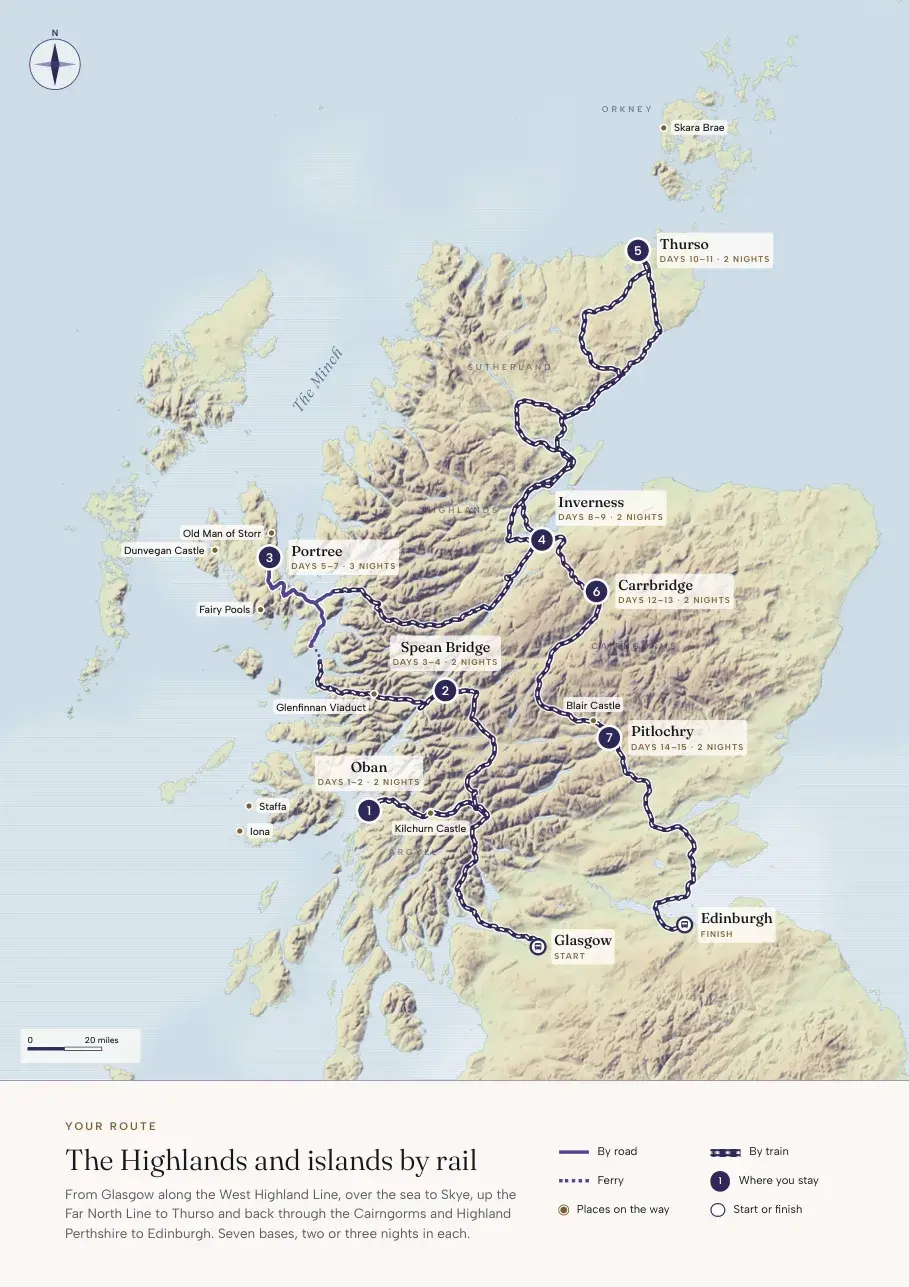
Rail, self-drive and walking holidaysThe route on a map, the days in order, and the practical detail people worry about before they book.
Day tours and experiencesThe time, the price and the meeting point at a glance, and an easy way to ask or book from a phone.
Selling to another countryA site of its own for that market, in its currency and its spelling, with the trips that suit it first.

How the work goes.

  1. 01

    A conversation

    You tell us how you sell, what your current site gets wrong and which systems you rely on.

  2. 02

    A plan and a price in writing

    The scope and the cost, before any work starts. Optional extras are listed separately.

  3. 03

    Built where you can see it

    You get a private preview link early. Your team checks trips and prices as they go in.

  4. 04

    Launch, then support

    We handle the switch-over and stay on for hosting, support and changes.

Leonard Millard and Rebecca Peake at an outdoor table in the sun, smiling
Leonard Millard (left) and Rebecca Peake, directors

You deal with the two people doing the work.

Peake Management Ltd is Rebecca and Leonard, in Bude, Cornwall. There’s no switchboard and no account manager. The people you talk to are the people who design and build your site.

Before Peake, we both worked in direct sales and marketing for holiday parks across the UK. So we start from how a trip gets sold, and work back to the page.

Company no. 15574401 on Companies House (opens in a new tab), registered in England and Wales. VAT GB471502511.

In build now

Two websites for McKinlay Kidd, a Scottish specialist tour operator: their North American site (December 2026) and their new main site (April 2027). A case study will follow once the first is live.

What operators ask us first.

We are a small operator. Is this for us?

Yes. We are a two-person company ourselves. The approach is the same for ten trips as for a hundred; the plan and the price are sized to what you actually need.

What does it cost?

It depends on how many trips you have, how many markets you sell to and which systems need connecting. After the first conversation you get the scope and the price in writing, before any work starts.

Do you work with our reservation system?

Usually, but it depends on what the system’s supplier makes available. We start by speaking to them, then tell you plainly what can be connected and what it would cost. Whatever the answer, every enquiry reaches your team by email and is saved safely.

Can our team update trips and prices themselves?

Yes. The content studio is set up so your team can edit trips, prices, departures and pages, and it comes with a help library written for your site.

Can you guarantee we will appear in AI answers?

No, and nobody honestly can. What we can do is make your expertise easy for search engines and AI assistants to read, check and quote, which is what gives a specialist the best chance.

We already have a website. Do we have to start again?

Not always. Sometimes the right first step is one focused site for a single market, with the main site to follow. We will tell you which we think is sensible, and why.

Tell us about your trips.

Ring or email, and one of us will tell you what we’d build and what it would cost.